
Endpoint lifecycle management (ELM) is the process of managing devices—including laptops, desktops, mobile devices, and tablets—from procurement and deployment through maintenance, refresh, and secure retirement.
While many organizations view endpoint lifecycle management as an IT operations function, it has become a critical business strategy that directly impacts cybersecurity, employee productivity, compliance, and operational resilience.
Endpoint lifecycle management is important because endpoints are the primary access points to corporate applications, data, and networks. Every unmanaged, outdated, or improperly secured device increases organizational risk.
A strategic endpoint lifecycle program helps organizations:
Organizations that treat endpoint management as a strategic initiative are better positioned to reduce risk while maximizing technology investments.
Endpoint lifecycle management plays a foundational role in cybersecurity.
As devices age, they become more difficult to secure. Unsupported operating systems, delayed patches, and outdated hardware create opportunities for cybercriminals to exploit vulnerabilities.
A mature endpoint lifecycle strategy ensures that devices are:
This reduces the attack surface and strengthens the organization's overall security posture.
Employees perform better when they have reliable, high-performing devices. Frequent crashes, slow startup times, and hardware failures create productivity losses that accumulate across the organization.
Proactive refresh cycles and standardized device management reduce emergency replacements, minimize downtime, and lower support costs.
Many regulatory frameworks require organizations to maintain secure, supported systems. Endpoint lifecycle management helps demonstrate compliance through asset tracking, patch management, and secure disposal practices.
Automation of provisioning, software deployment, patching, and asset management allows IT teams to focus on strategic initiatives rather than repetitive maintenance tasks.
Organizations that rely on reactive device management often experience:
Over time, these issues increase operational costs and expose the business to unnecessary risk.
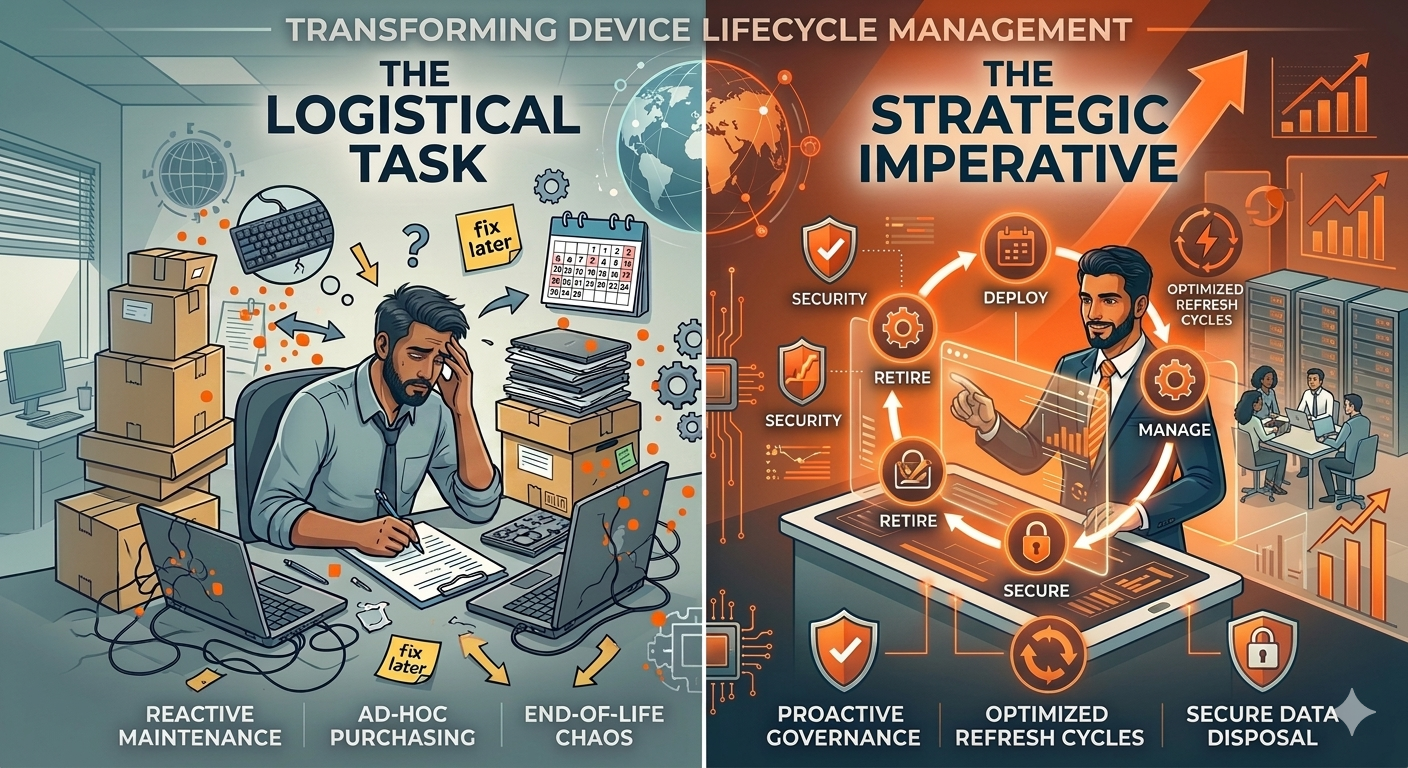
The most effective organizations view endpoint lifecycle management as a business strategy rather than a procurement or support function.
A modern approach includes:
This approach aligns endpoint investments with broader business objectives and risk management priorities.
Endpoint lifecycle management is no longer just a logistical task for IT departments. It is a strategic imperative that influences cybersecurity, employee productivity, compliance, and business continuity.
As organizations continue to support hybrid workforces and face increasingly sophisticated cyber threats, a proactive endpoint lifecycle strategy has become essential for maintaining operational efficiency and reducing risk. Businesses that treat endpoint lifecycle management as a strategic discipline will be better equipped to protect their assets, support their workforce, and achieve long-term growth.






.png)